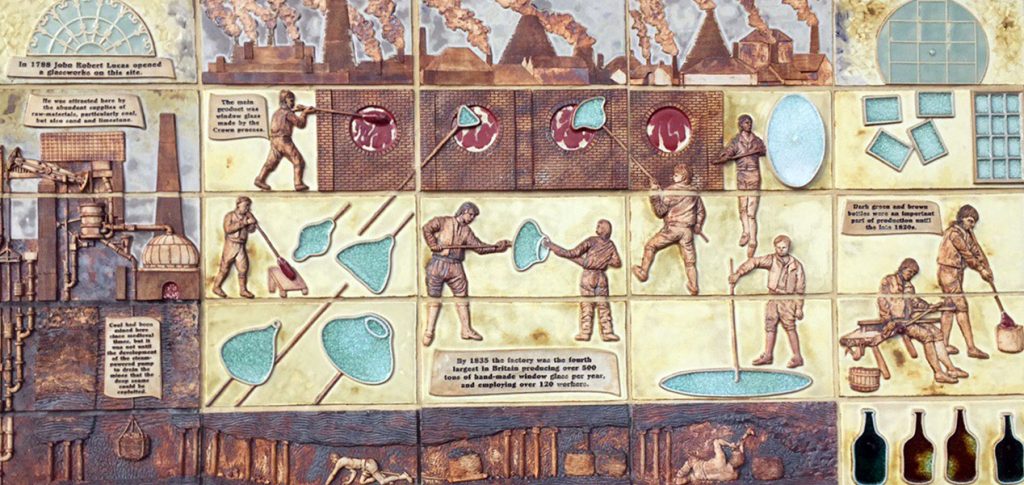
Glass is one of humanity’s oldest and most fascinating inventions. Its story begins over 5,000 years ago, around 3500 BC, in the lands of Mesopotamia, Syria, and ancient Egypt. The earliest glass artifacts—mostly beads—may have been discovered by accident during metalworking. Early glass was rare and precious, treated like a luxury reserved for the elite.
For centuries, the secrets of glassmaking were passed down slowly and carefully. In Egypt and Syria, artisans developed new techniques like core-forming and glazing. By the 9th century BC, glassmaking saw a revival with the discovery of how to make colorless glass. The first known glassmaking instructions appeared on clay tablets in the Assyrian king Ashurbanipal’s library around 650 BC.
During the Hellenistic period, glassmakers experimented even further. They created tableware, vessels, and decorative items using innovative methods like slumping and millefiori—a beautiful mosaic effect using colored glass canes. These ancient discoveries formed the basis of what we know today as glass artistry.
The Roman Empire elevated glass production to an industry. Romans used glass for everything from vessels and windows to mosaics and funeral urns. Their influence spread glassmaking knowledge across Europe. Meanwhile, in China and South Asia, glass developed at a slower pace, with evidence dating back to around 1730 BC in South Asia and the late Zhou Dynasty in China.
Islamic glassmakers in Persia and the Arab world pushed the science even further. By the 8th century, scholars like Jābir ibn Hayyān described dozens of recipes for colored glass, while craftsmen in Islamic Spain were already making clear glass mirrors by the 11th century.
Fast forward to the Renaissance, and the island of Murano in Venice became the global capital of luxury glassmaking. Their secret? Ultra-pure silica sand and exclusive access to soda ash, which allowed Murano artisans to produce dazzling, crystal-clear glass. In Central Europe, Bohemian glassmakers developed richly decorated crystal pieces in the Baroque style, turning glass into high art.
All of these breakthroughs are part of a larger story—the story of how humans have explored, experimented with, and mastered natural forces. Lawrence Brown’s new book, Foundations of Physics, brings that story to life.
Brown, a seasoned inventor, retired engineer, and former teacher, draws a captivating journey through time, showing how early humans interacted with powerful forces like magnetism, optics, and materials like glass. His clear, engaging style makes complex ideas accessible and fascinating.
If you’re curious about how ancient ingenuity laid the foundation for modern science and technology, Foundations of Physics is the perfect read.
Pre-order your copy on Amazon today and step into the world of discovery!